Investing in Data Automation: How Styberg Is Building a Smarter Manufacturing Future
As Styberg approaches nearly a century in business, the company continues to demonstrate a principle that has fueled its longevity from the beginning: successful manufacturers never stop improving. While the tools have changed over the decades, the commitment to innovation, efficiency, and customer service remains the same.
Today, that evolution is taking shape through data automation, information management, and artificial intelligence. For a manufacturing company that has operated successfully for generations, preserving institutional knowledge while embracing new technology presents both an opportunity and a challenge. Customer requirements will become more demanding and manufacturing processes are increasingly data-driven, which means companies must ensure critical information is accessible, standardized, and actionable.
“Styberg’s evolution is taking shape through data automation, information management, and artificial intelligence.” – Mitch McCaffery
One recent example comes from the work of Evan S., a student majoring in information management technology at Syracuse University. During his summer internship at Styberg, Evan helped build a foundation on how information is collected, organized, and used across the organization, enabling employees to make faster, more informed decisions.
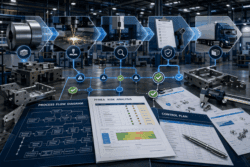
One of his most impactful initiatives involved improving how quality data was organized and managed for IATF audit preparation. Large amounts of quality management system data was transformed into a more usable format, which subject matter experts could review easily and update critical documentation more efficiently. What once required extensive manual effort became a streamlined process that improved audit readiness while reducing administrative burden.
Evan’s work also supported a broader company initiative to explore how automation and artificial intelligence can strengthen business operations by increasing speed, consistency, and accuracy throughout the organization.
“Manufacturing companies generate enormous amounts of data every day – the challenge is not collecting the information, but making it useful,” Evan said. “Through better data management and automation, Styberg is creating workflows that connect quoting, engineering, quality, production, and business operations, allowing teams to work from the same reliable information and identify opportunities for continuous improvement.”, said Mitch McCaffery, Vice President of Business Development & Engineering for Styberg.
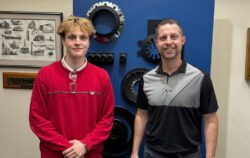
Evan and Mitch at Styberg Engineering
Why Automation Matters in Modern Metal Stamping
For metal stamping manufacturers like Styberg, success depends on more than presses, tooling, and production capacity. It requires the ability to manage vast amounts of information accurately and efficiently throughout the manufacturing process. Every customer quote, material specification, tooling requirement, quality document, production schedule, and inspection record generates data that must be shared across multiple departments. As customer demands grow and manufacturing processes become more complex, manual methods of managing that information create inefficiencies, increase the potential for errors, and limit a company’s ability to scale.
Styberg’s investment in data automation extends well beyond quality management:
Safety: When critical process information, setup instructions, inspection requirements, and work procedures are standardized and easily accessible, employees can work with greater confidence and consistency. Automated systems reduce the risk of errors caused by missing information, outdated documents, or reliance on memory, helping create a safer work environment. Styberg is focused on organizing and standardizing data so employees can access more accurate information when they need it.
Efficiency and Workflow: Manufacturing generates thousands of data points across quoting, engineering, production, quality, and shipping. Automated processes help eliminate duplicate data entry, reduce administrative tasks, and ensure information flows seamlessly between departments. Evan’s summer projects demonstrated how organizing data and creating automated workflows could significantly reduce the time required to complete complex tasks and prepare for audits.
Quality: Consistent data leads to consistent outcomes. By standardizing quality information, control plans, and inspection processes, Styberg can ensure that employees are working from the same information and following the same procedures. The company’s ongoing exploration of automated inspection technologies and data-driven quality systems reflects a commitment to catching issues earlier and improving overall product quality.
Engineering and Continuous Improvement: Engineers are most valuable when solving complex problems and driving innovation, not spending time searching for information or manually compiling reports. Better data visibility allows engineering teams to identify trends, analyze process performance, and make improvements based on real-world information. Styberg understands the importance of connecting data across departments to give management and supervisors a clearer understanding of what is happening throughout the manufacturing process.
Company Culture and Knowledge Sharing: One of the biggest challenges facing manufacturers is preserving knowledge as experienced employees retire. Data automation helps capture expertise, document processes, and make information available throughout the organization. Investments that improve visibility and standardize workflows help reduce reliance on one person’s knowledge while encouraging collaboration and more informed decision-making.
Customer Relationships: Customers increasingly expect quick responses, reliable quality, and transparency throughout the manufacturing process. It’s the world we live in. Automated data systems support faster quoting, more accurate cost estimates, improved production planning, and better communication with customers. AI-powered quoting tools have the potential to dramatically reduce response times, helping Styberg strengthen long-term partnerships.
Building the Next 100 Years
For a metal stamping manufacturer, longevity depends on more than equipment and production capacity. It requires the ability to capture knowledge, train future generations of employees, and continuously improve how information flows throughout the organization.
“Evan’s work highlighted how information management has become just as important as managing materials, tooling, and equipment,” McCaffery said. “Modern manufacturers generate enormous amounts of data through quoting, engineering, production, quality, and customer interactions. When that information is organized effectively, teams can respond faster, solve problems more efficiently, and provide a better experience for customers.”
The same principles that helped Styberg thrive for nearly a century continue to guide the company today: invest in people, embrace innovation, and continuously improve. By combining decades of manufacturing expertise with advanced automation and data-driven decision-making, Styberg is positioning itself not only for today’s challenges, but for the next generation of growth and success.
If you are looking for a manufacturing partner committed to innovative continuous improvement, contact us today.